


Massachusetts lawmakers are considering one of the most comprehensive micromobility regulatory overhauls we’ve seen in the US yet, proposing a new legal framework that would categorize everything from bicycles and e-bikes to electric scooters and Sur Ron-style electric motos into a four-tier speed classification system.
And unlike many recent state proposals that have focused narrowly on restricting e-bikes, the Massachusetts bill appears to be taking a more nuanced – though still fairly aggressive – approach to defining where different types of electric vehicles belong.
The bill, known as S.3077, would formally recognize Class 3 e-bikes in Massachusetts law for the first time (they were previously classified as ‘motorized bicycles’ that required a license and DOT helmet like a motorcycle), now defining them instead as pedal-assist electric bicycles that stop providing assistance at 28 mph (45 km/h).
But that’s just the beginning. The bill goes much deeper, touching on every type of micromobility device, from your kid’s bicycle with training wheels all the way up to full-size motorcycles, and everything in between.
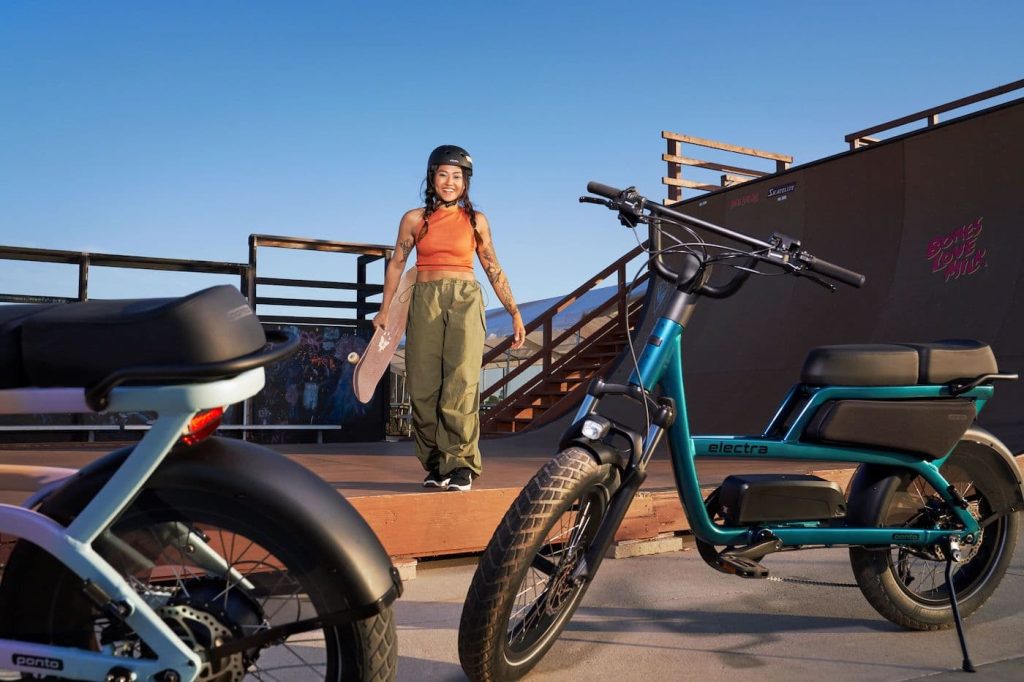
A new “speed tier” system for micromobility
The core of the proposal is something called a “Maximum Designed Speed Tier Classification System,” which categorizes micromobility devices based on their top designed speed.
Under the proposed system:
- Speed Tier 0 includes devices with a top assisted or designed speed of 20 mph (32 km/h) or less. This includes traditional bicycles, Class 1 and Class 2 e-bikes, low-speed scooters, and mobility devices.
- Speed Tier 1 covers devices between 21 mph and 30 mph (33 and 48 km/h), including Class 3 e-bikes.
- Speed Tier 2 applies to devices between 31 mph and 40 mph (49 and 64 km/h).
- Speed Tier 3 covers anything above 40 mph (64 km/h).
That may sound straightforward, but the implications are significant because each tier receives different access rights and regulatory treatment.
Tier 0 devices would largely be treated like bicycles. They would continue to enjoy access to bike lanes, bike paths, and shared-use infrastructure. Helmet requirements would apply only to riders aged 16 and younger. It’s also a fairly inclusive category, touching everything from pedal bicycles to seated scooters like JackRabbits and standing scooters like VMAXs, and even electric skateboards or OneWheels, as long as they are limited to top speeds under 20 mph (32 km/h).
Tier 1 devices – including 28 mph (45 km/h) Class 3 e-bikes – would still maintain access to bicycle infrastructure, but with stricter rules. Riders and passengers would be required to wear helmets regardless of age, and riders would need to be at least 16 years old.
Then things change dramatically for Tier 2 and Tier 3, which would now include many of the grey-area or previously illegal micromobility devices like Sur Ron and Talaria-style electric motorbikes.
Those faster micromobility devices would be banned from:
- sidewalks
- bike lanes
- bike paths
- separated micromobility lanes
- shared-use paths
Instead, they would effectively be pushed into the roadway environment alongside conventional motor vehicles.
That portion of the bill appears directly aimed at the growing popularity of high-speed electric motos and heavily modified e-bikes that increasingly blur the line between bicycles and motorcycles, or in the case of higher power and faster e-motos, blow right past the line.
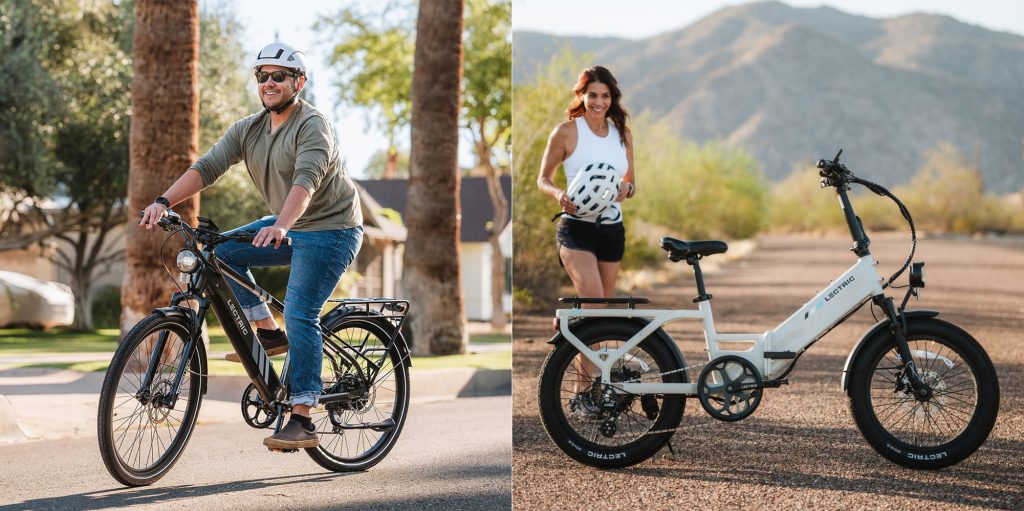
A direct response to the “gray area” e-bike market
The proposal also explicitly prohibits aftermarket modifications that increase:
- top speed
- propulsion power
- passenger capacity
That language is likely intended to target de-restricted e-bikes and Sur Ron/Talaria-style machines that are frequently modified beyond their factory specifications.
The bill also draws a firmer distinction between e-bikes and mopeds than many current state laws.
Under the proposal, “motorized bicycles” or mopeds would:
- require registration
- require insurance
- be banned from bike lanes and bike paths
But importantly, the bill specifically states that electric bicycles are not mopeds. So as long as the bike fits within the traditional three-class electric bicycle system, it would not be considered a moped under Massachusetts law.
That’s a fairly important distinction because some states have recently moved toward lumping higher-speed e-bikes into moped-style regulation frameworks.
Massachusetts instead appears to be carving out a middle ground where:
- lower-speed e-bikes remain bicycle-adjacent
- Class 3 e-bikes remain legal and infrastructure-compatible
- higher-speed electric motos are separated into their own category

UL certification becomes a major focus
The bill would also make safety certification a key part of the regulatory framework.
It would require:
- UL 2271 certification on batteries for powered micromobility devices
- UL 2849 certification for e-bikes
- UL 2272 certification for other powered micromobility devices
That’s a major development in itself, as UL compliance for micromobility is still not a requirement for most states in the US, and rather has slowly become voluntarily adopted by many of the largest e-bike companies to get ahead of regulation and inspire more confidence in the safety of their products.
But that UL certification has increasingly become one of the biggest issues in the e-bike industry, especially following high-profile battery fires in dense urban environments like New York City. If enacted, Massachusetts would become one of the more aggressive states in tying legality directly to recognized electrical safety standards.
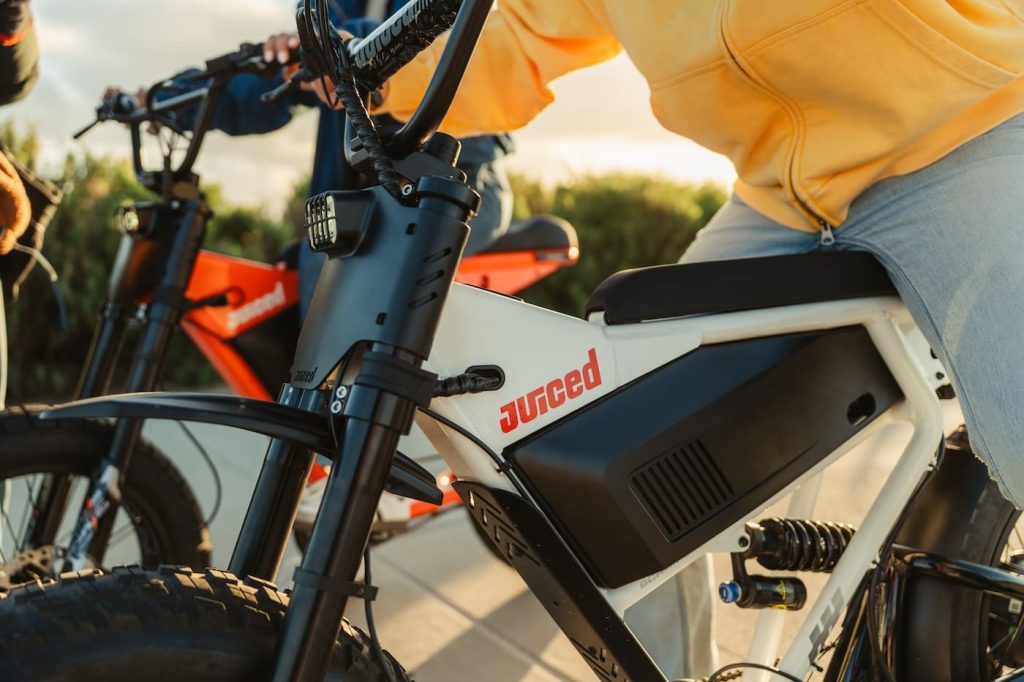
The bill leaves room for future regulation
Perhaps the most consequential section is one many readers may overlook.
The proposal specifically authorizes Massachusetts regulators to later develop additional rules for micromobility devices covering:
- registration
- licensing
- insurance
- decals/identification
- inspections
- fines and penalties
Essentially, this bill establishes the framework now while leaving the door open for much more detailed regulation later.
A statewide working group would also be created to study future micromobility policy and issue recommendations through 2027.
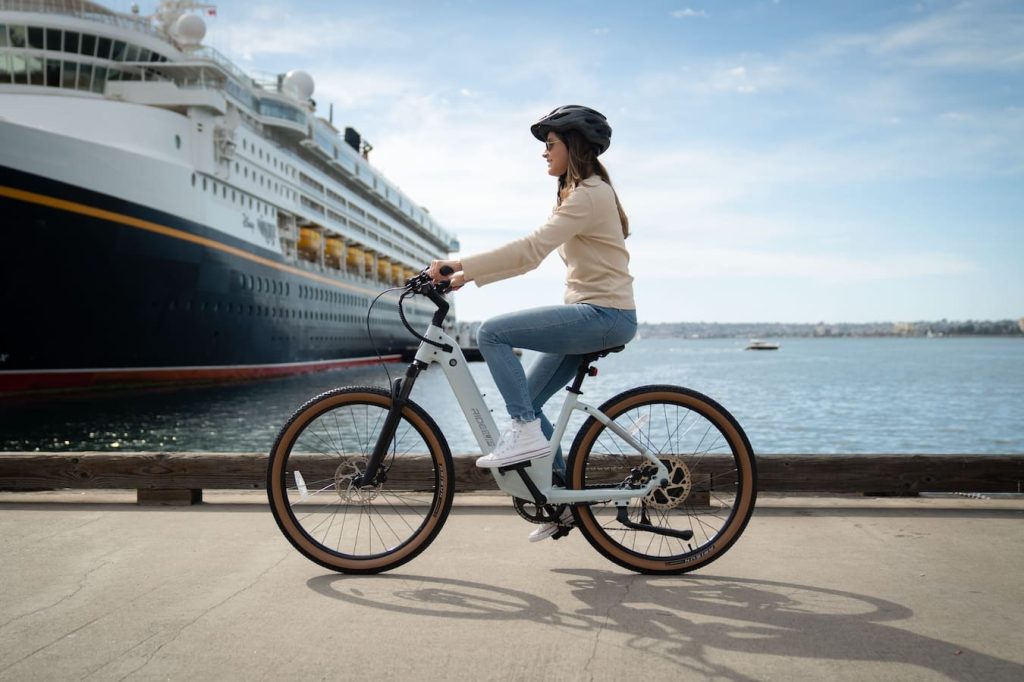
Electrek’s Take
This is one of the most technically detailed micromobility bills I’ve seen proposed in the US so far, and interestingly, it essentially ignores most vehicle parameters such as weight and power, instead focusing nearly entirely on maximum speed.
In my opinion, compared to some of the reactionary anti-e-bike proposals we’ve covered recently, Massachusetts appears to be trying to build an actual framework instead of simply banning things first and asking questions later.
That doesn’t mean everyone will like it, and I still have my own issues with it, not the least of which is that a four-tier system (especially one that maxes out at “Tier 3” due to starting numerically at zero) is likely to be confused with the three-class system already in use for e-bikes in most of the US. In Massachusetts’ new system, a Class 3 e-bike is a Tier 1 micromobility device, not to be confused with a 100 MPH (160 km/h) Harley-Davidson motorcycle, which is a Tier 3 (not Class 3) device. Theoretically, the tiers seem reasonably well thought out, but the non-aligning and somewhat overlapping numerical systems working parallel are bound to confuse people that are new to micromobility.
Next, the bill is clearly tough on high-speed electric motos and modified bikes. If you’re riding a 40 mph (64 km/h) Sur Ron in the bike lane, Massachusetts lawmakers are very obviously signaling that they don’t think that belongs there. And I agree. I spent a year living in Boston nearly a decade ago, back when 30 mph (48 km/h) mopeds actually were allowed in the bike lanes, and I rarely took my GenZe 2.0 electric moped into the bike lane because it just felt so out of place. So let’s keep what are basically small motorcycles out of the bike lane. But at the same time, it’s important to note that a 20 mph (32 km/h) Class 2 e-bike that looks like a moped is still an electric bicycle, and the bike lane is still its turf, too.
Further, the proposal also preserves and legitimizes Class 3 e-bikes in a way many advocates will likely appreciate. Instead of collapsing everything into “motor vehicle” territory, the bill recognizes meaningful differences between a 20 mph commuter e-bike, a 28 mph pedal-assist bike, and a 50 mph e-moto.
That’s a level of nuance many states still haven’t reached.
The larger takeaway here may be that the era of broad, one-size-fits-all e-bike regulation is ending. Legislators are starting to recognize that the modern micromobility world now spans everything from pedal bikes to near-motorcycles, and the law is slowly evolving to reflect that reality. But a patchwork of varying and admittedly complicated laws that differ from state to state could also lead to unnecessary confusion for consumers and regulatory hurdles for manufacturers that must make their e-bikes into something that pleases every state. So I still believe that reasonable federal regulation may be the best approach, as scary of a prospect as that it is to put that kind of responsibility in the hands of a few.


FTC: We use income earning auto affiliate links. More.
