



Under the current system, college athletes can transfer from one school to the next as many times as they wish — and some athletes are doing just that.
INDIANAPOLIS — The college basketball season is over, but the transfer portal just opened. For 15 days, many players will be entering the portal looking for a better opportunity. Under the current system, college athletes can transfer from one school to the next as many times as they wish — and some athletes are doing just that.
Some are looking for more playing time, a new coach, new location or maybe a better financial package through name, image and likeness deals.
Take the national champion Michigan Wolverines, for example. They are the first team to win the title with a starting lineup made up entirely of transfers. None of the starting five started college at Michigan.
Roster turnover is rampant in college sports. President Donald Trump met with college sports stakeholders in March at the White House. Indiana University Vice President and Director of Intercollegiate Athletics Scott Dolson attended the “Saving College Sports Roundtable.”

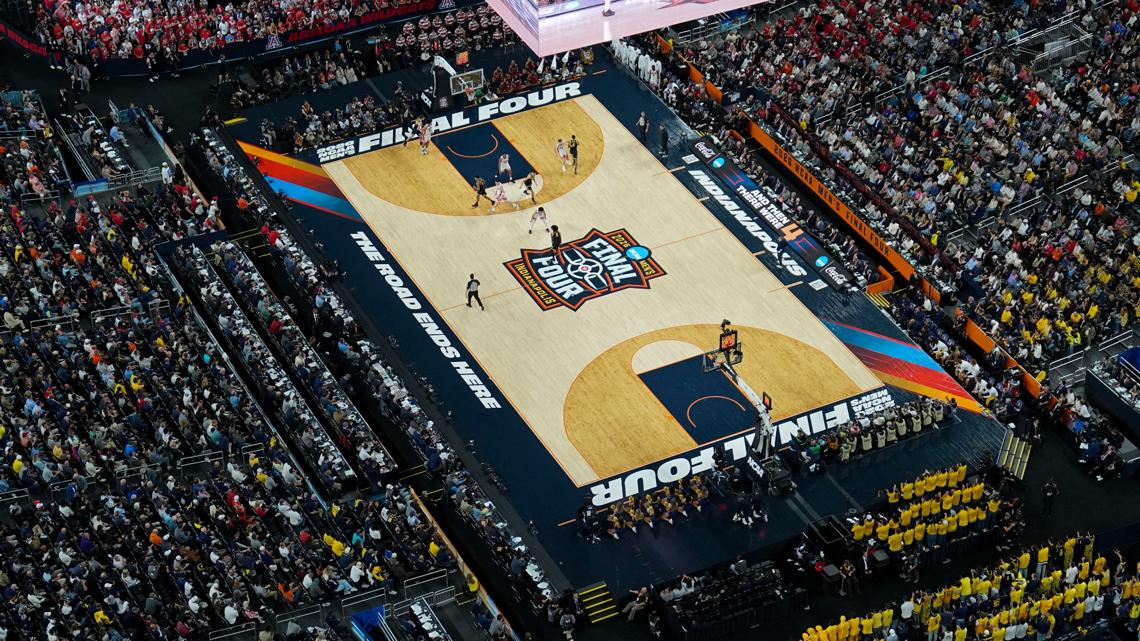
Trump signed an executive order right before the Final Four that will try to put some guardrails in place. The order calls for the NCAA to create rules that mandate college athletes can play for no more than a five-year period.
“Somewhere in the area of four or five years is what makes sense,” Mid-American Conference Commissioner Dr. Jon Steinbrecher said. “You go to college to be a student, to attain your degree, and so there should be a narrow window of time because if we don’t move people through the system, you can’t let more people in the system, so it hinders high school kids.”
The executive order would allow student-athletes to transfer schools only once before they graduate without having to sit out a season. Schools that break the rules could lose federal funding.
“A number of kids are moving quite regularly, which does not make sense from an educational standpoint,” Steinbrecher said. “And so we need to get back and have a discussion on perhaps you should be able to transfer once and be immediately eligible. Should it be more than that? Because our educational metrics tell us the more times you transfer, the less likely it is that you’re going to graduate from college.”
Ball State University in Muncie plays in the Mid-American Conference.
NCAA President Charlie Baker provided a statement in response to the president’s executive order:
“The NCAA has modernized college sports to deliver more benefits for student-athletes, and the Executive Order reinforces many of our mandatory protections – including guaranteed health care coverage, mental health services, and scholarship protections. This action is a significant step forward, and we appreciate the Administration’s interest and attention to these issues. Stabilizing college athletics for student-athletes still requires a permanent, bipartisan federal legislative solution, so we look forward to continuing to work alongside the Administration and Congress to enact targeted legislation with the support of student-athlete leaders from all three divisions.”
Many college athletes are now represented by agents, like Indianapolis-based Exclusive Sports Group.
“Dictating what the rules are, and to say why we are putting those rules in place, needs to be established,” said Buddy Baker, Exclusive Sports Group CEO and founder. “We can’t just put out an edict and say, ‘This is what we’re saying. We don’t care if it’s fair. We don’t care if it’s constitutional. We don’t care about circumstances. We don’t care if it violates antitrust laws. We’re just going to do these types of things.’ I’m always going to look out for the best interest of the student-athlete. That doesn’t just mean from a financial or business standpoint. From a student-athlete perspective, you would have to figure out a way that creates a free marketplace, but in the same breath, also operates in the best interest of student-athlete from a business and just life standpoint.”
Baker said that agents representing college student-athletes need to be certified and register with the NCAA. Right now, there is no process for credentialing agents of student-athletes.
The executive order is scheduled to take effect in August. But many legal experts believe it would not hold up in court. That’s why the order also calls on Congress to pass legislation that would restore financial stability and protect the future of college sports.

