


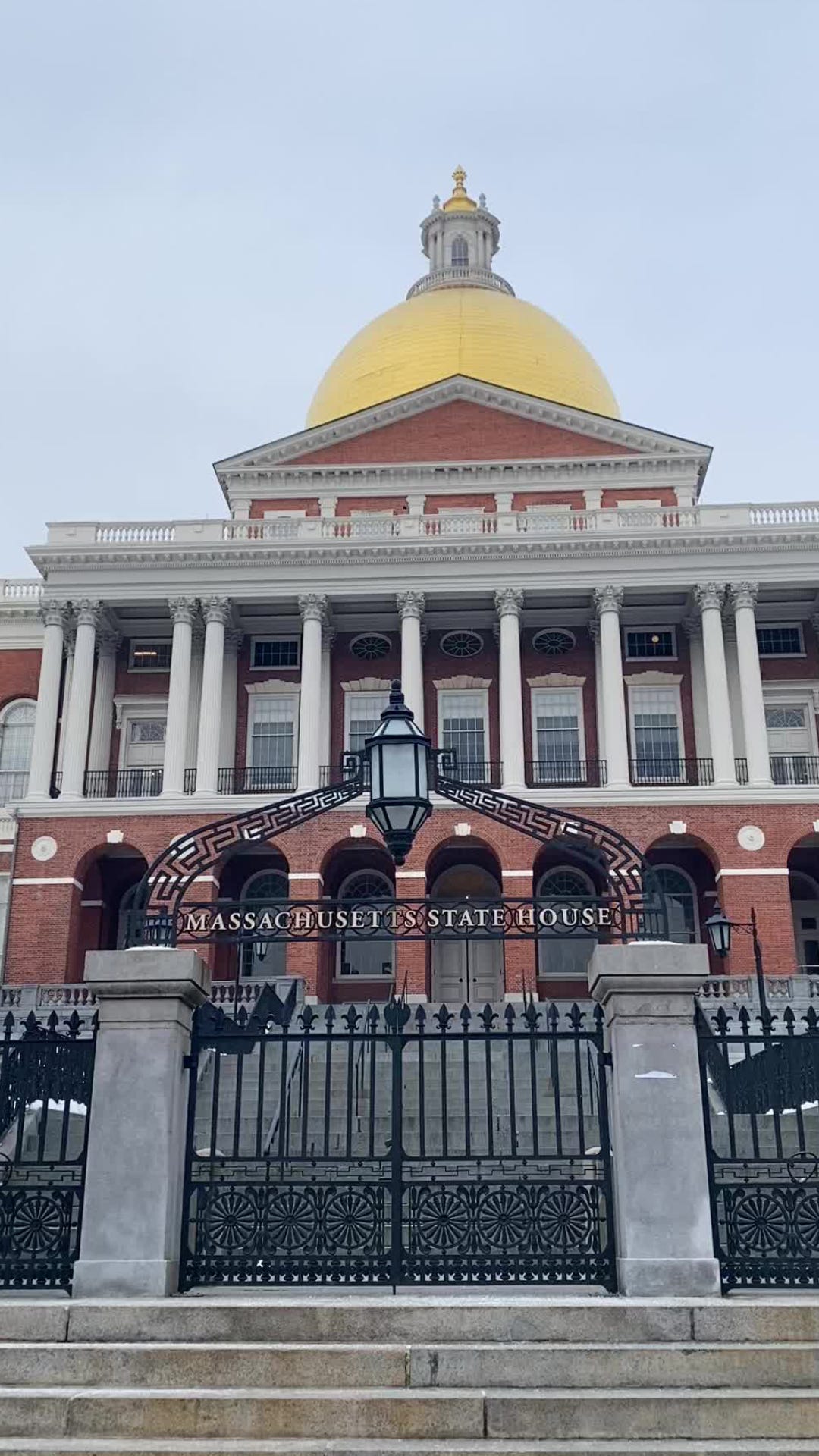

MA State House: Watch out for the ‘Sacred Cod’
Meet Margie Cullen, New England Politics Reporter, and get introduced to the Massachusetts State House – including the ‘Sacred Cod.’
- The analysis revealed that, as of Feb. 20, 12 Democrats are primarying five sitting members of the House, which is more than any election in the past decade.
- Political scientists in Massachusetts said that this phenomenon has to do with voters’ anger over Trump and frustration with Democrats.
- In Massachusetts, all of the congressional districts are safe blue seats, meaning that the winner of the primary is favored going into the general election.
Massachusetts’ federal delegation is facing its largest number of primary challenges in over a decade as Democrats continue to search for direction under a second Donald Trump presidency.
Using data from Ballotpedia, the Worcester Telegram analyzed the number of primary challengers that the current incumbent representatives in Massachusetts have faced each election since 2014, which was the second election after the state’s districts were redrawn. All of the Massachusetts representatives are Democrats.
The analysis revealed that, as of Feb. 20, 12 Democrats are primarying five sitting members of the House, which is more than any election in the past decade and a stark contrast to both the 2022 and 2024 election, when none of the sitting representatives faced a single primary challenger.
Political scientists in Massachusetts said that this phenomenon has to do with voters’ anger over Trump and frustration with Democrats.
In Massachusetts, all of the congressional districts are considered safe blue seats, meaning that the winner of the primary is favored going into the general election.
See data: How many people are challenging MA representatives?
The Worcester Telegram looked at the reelection races of all the current representatives in Massachusetts in the past 12 years., finding a stark uptick. This chart does not include open seats or when the representative was first elected. Data was analyzed starting 2014 as the first year because 2012 was the first election after Massachusetts lost a seat in the 2010 census and redrew the districts, meaning that all of the races were like open seat races.
Even when looking at all elections against incumbents since 2014, not just the elections of the current representatives, it’s clear that this year is an especially heavy one for challengers.
The field could change before the September primary: those who want to run in Democratic or Republican primaries for federal and statewide offices in Massachusetts have until May 5th to submit their nomination papers. Challengers could also withdraw.
Why are there so many challengers
There’s “a lot of energy” on the left right now, said Robert Boatright, a political science professor at Clark University, and voters are looking for someone to take it out on.
Polls have shown that voters are unhappy with the Democratic party, leading to high profile elections springing up around the country.
Massachusetts is not immune to the trend.
“Many voters have expressed in Massachusetts about what they want out of their representatives, particularly those that represent them in Washington, is to push back against the Trump administration,” said Tatishe Nteta, director of the UMass Poll. “There is a widespread assumption that incumbent members of Congress have not done a good enough job in expressing this viewpoint.”
Boatright said voters might look at people like Rep. Richard Neal, D-Mass., or Rep. Bill Keating, D-Mass., both of whom are facing primary challengers this year, and think that they’re not doing enough to combat Trump because they aren’t as visible as more outspoken representatives like Rep. Ayanna Pressley or Rep. Jim McGovern, who have not yet drawn primary opponents this year.
Another factor could be age, Nteta said. Neal, for example, is 77 and has been in office for almost four decades, while Rep. Stephen Lynch, 70, has served for a quarter of a century.
That’s also a nationwide sticking point for Democrats: it’s one of the main reasons behind Rep. Seth Moulton’s challenge against Sen. Ed Markey here in Massachusetts, and it’s playing out in primaries from Maine to Tennessee.
“A younger generation of folks are looking to expand their political horizons and to represent constituents here in Massachusetts, and the only way to do so is to challenge the incumbents,” Nteta said.
Boatright said that in general, you tend to see a larger number of challenges in “good Democratic years” like 2018 or 2006, both midterm years under Republican presidents. Presidents often lose seats from their party during midterm elections.
Indeed, the data shows a slightly higher number of challengers in 2018. That year was also when Pressley famously defeated a Democratic incumbent.
This year’s challengers may be hoping to replicate her success. But even though there’s more challengers this year, it doesn’t mean that they’ll be more successful, Boatright warned. It’s often difficult to beat incumbents because of name recognition, access to funds and institutional support.
