

Crime
Clancy retained control over her actions the night she strangled her children in January 2023, forensic psychologist Kirk Heilbrun testified Tuesday.
Livestream via Law & Crime.
Sign up to receive alerts when the Lindsay Clancy murder trial verdict is in: email alerts, Apple app, or Android app.
Judge William Sullivan ended Tuesday’s court session shortly before 4 p.m. with prosecutors questioning their rebuttal witness Dr. Gregory Saathoff. Saathoff will be back on the witness stand when court resumes Wednesday morning. Sullivan said closing arguments will likely be heard Thursday.
On the stand Tuesday:
- Dr. Gregory Saathoff, senior psychiatrist for the FBI’s Behavioral Analysis Unit in Quantico, Virginia
- Kirk Heilbrun, forensic psychologist
This story may contain content readers find disturbing. For help with postpartum mood disorders, text or call 1-833-TLC-MAMA for the National Maternal Mental Health Hotline. If you or someone you know is having thoughts of suicide, call 988 or go to https://988lifeline.org/ to chat online.
2:30 p.m. update: Lindsay Clancy was aware her actions were illegal and should be held criminally responsible, prosecution expert says
Lindsay Clancy retained control over her actions the night she strangled her children in January 2023 and should be held criminally responsible, forensic psychologist Kirk Heilbrun opined Tuesday.
Testifying for the prosecution, Heilbrun previously told jurors he believes Clancy was suicidal and didn’t want to leave her children — 5-year-old Cora, 3-year-old Dawson, and 8-month-old Callan — to suffer without her.
Though Clancy reported worsening depression and hopelessness prior to the killings, “she retained an awareness of the illegality of killing others, including killing her children,” Heilbrun testified. “Her moral awareness of the wrongfulness of this killing was influenced by her strong desire to die and, if she were dead, not to leave her children behind.”
Clancy does not deny that she strangled her children at home in Duxbury before paralyzing herself in a suicide attempt on Jan. 24, 2023. She is raising what’s commonly known as an insanity defense as she argues she was wracked by postpartum psychosis and heard a voice in her head instructing her to kill the children and herself.
With the question of Clancy’s criminal responsibility still up in the air, prosecutors must prove beyond a reasonable doubt that even if she suffered from a mental illness at the time of the killings, she retained a substantial capacity to appreciate the wrongfulness or criminality of her conduct and to act in accordance with the law.
“Her capacity to conform her conduct to the requirements of the law is, again, best understood by considering the seriousness of her suicide attempt and her strong desire not to leave her children,” Heilbrun offered.
He testified that Clancy demonstrated self-control throughout the day on Jan. 24, 2023, and her actions that night were influenced by her desire to end the mental anguish she had felt since October 2022.
“Although this depression and hopelessness influenced her decisions, she retained control over whether, when, and how she carried it out, and the inclusion of her children,” Heilbrun added.
He also reiterated his professional opinion that Clancy was experiencing depressive symptoms of bipolar II disorder at the time of the killings, exacerbated by a lack of sleep and adverse reactions to psychiatric medications. Heilbrun further testified that Clancy’s mental state the night of the killings was more in line with altruistic filicide than with an episode of acute psychosis with command hallucinations, as the defense has claimed.
Prosecution expert offers an alternative to defense’s psychosis explanation
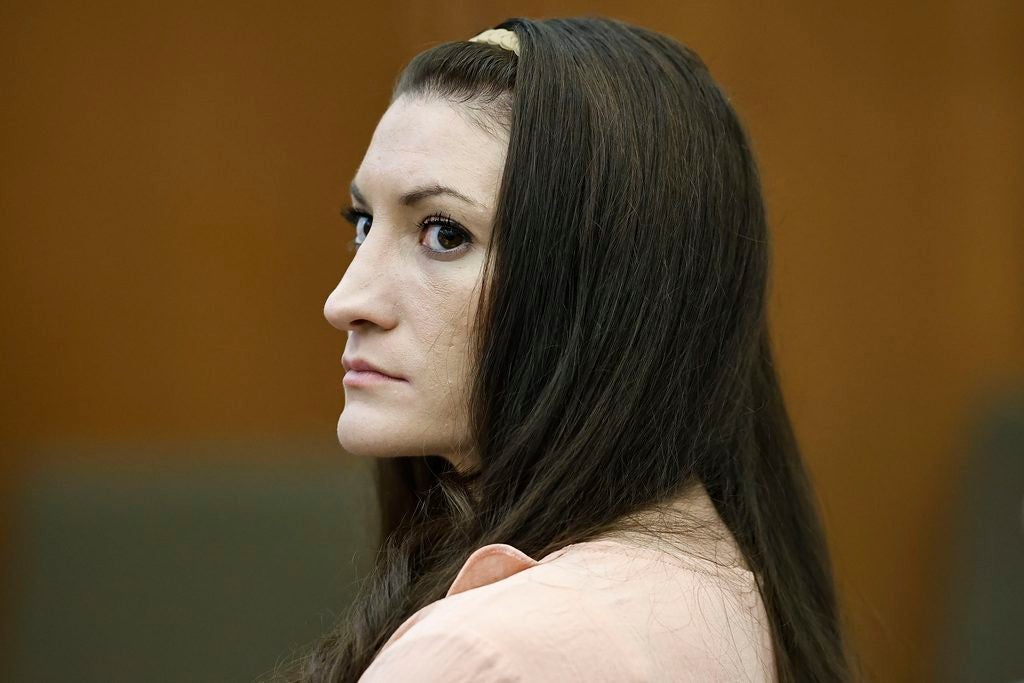
At Assistant District Attorney Jennifer Sprague’s prompting, Heilbrun explained the concept of peritraumatic dissociation, describing it as “something that is much more commonly experienced in that kind of set of circumstances than psychotic symptoms.”
According to Heilbrun, peritraumatic dissociation can occur under frightening or traumatic circumstances and result “in the sense that you kind of feel that things are unreal or that it’s not you, it’s like you’re watching yourself go through actions, and so on.”
He added: “It’s the sort of thing that if you talk about it, it sounds like it could be psychotic, but it’s actually … more likely to be a recognized aspect of going through a traumatic situation or set of circumstances that many people going through something like that would experience.”
Clancy showed signs of peritraumatic dissociation regarding the killings, he confirmed.
“She talked about feeling like it wasn’t her, like she was watching herself, like she was going through what she called ‘no thinking, no decision-making, only responding to the voice and taking action,’” Heilbrun recalled.
But Clancy did show some decision-making capability, he argued.
“This is difficult but important to say, that there are just many ongoing decisions that have to be made to accomplish a killing like this in 18 to 20 minutes,” Heilbrun explained. “For example, why the basement? Who among the children goes first? What do you say to the kids to keep them from panicking?”
Fielding questions from Sprague, he recalled that Clancy generally had a good memory for dates, medications, and other relevant details when he interviewed her more than three years after the fact, but that she appeared “much more cautious and guarded” when discussing her mental state during the killings.
Heilbrun denied that, in his conversations with Clancy, she appeared to be “over” the deaths of her children “or thinking only about herself.”
“She is still grieving. She’s still in mourning for those kids. And she used language like, ‘I have lost everything, and I don’t want to be here,’” Heilbrun recalled. “So I would not think of Lindsay Clancy as someone who is really self-centered or oriented only to herself. She is grieving her children.”
He also reiterated his belief that Clancy’s sense of hopelessness was driven in part by her unsuccessful attempts to treat her mental illness in the months prior to the killings.
“She’s an individual who, for most of her life, has been disciplined and liked to control things, liked to work hard, liked to accomplish things,” Heilbrun noted. “And one of the things that was striking about what happened with her between October [2022] and January [2023] is that she seemed to be doing her best, talking to the doctors, talking to the therapists, working on trying to get things accomplished in terms of lessening the anxiety and getting the right medications. And it wasn’t working, and she couldn’t help make it work.”
Forensic psychologist grilled in tense cross-examination
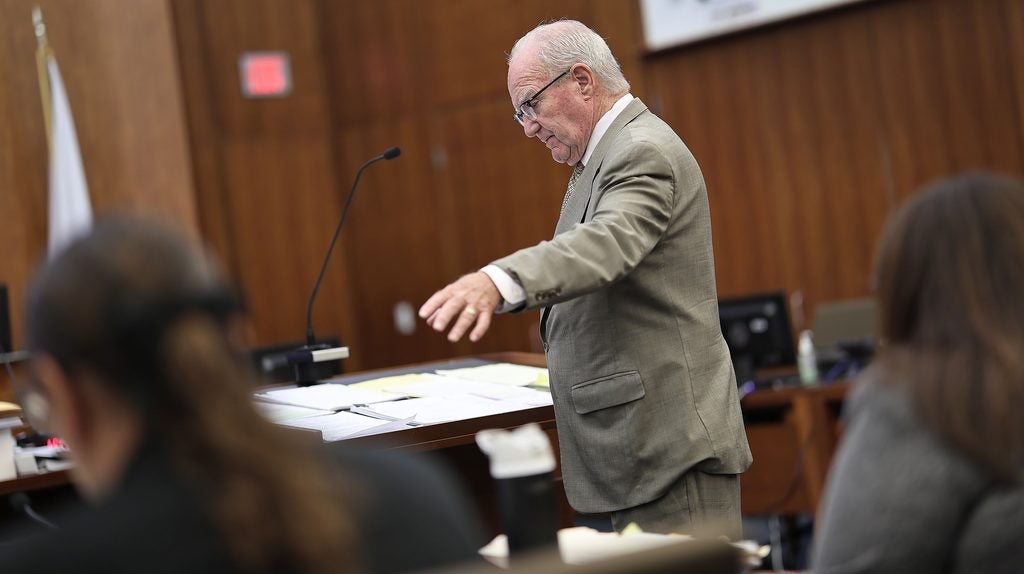
On his cross-examination, defense attorney Kevin Reddington questioned whether Heilbrun believes Clancy is a controlling person. He pointed specifically to the detailed instructions she used to leave for her children’s babysitter.
“That is something that is [evidence of Clancy] working hard and being disciplined and exerting a certain amount of control, yes,” Heilbrun answered.
Reddington then asked Heilbrun whether he would agree that Clancy “by all accounts is and was an incredible mother taking care of her kids.”
“I would describe her as a very good mother, yes,” Heilbrun replied.
“And in fact, sir, in the past six weeks or five weeks, there hasn’t been one person that’s had one thing bad to say about her, other than these two,” Reddington continued, gesturing to Sprague and fellow prosecutor Shanan Buckingham. Judge William Sullivan sustained an objection from the prosecution, and Heilbrun later testified he wasn’t aware whether any prior witnesses had testified that Clancy was a bad wife or mother.
Elsewhere in his testimony, Heilbrun agreed with Reddington that it is generally better to conduct a forensic psychological evaluation closer to the event in question. Reddington also sought to undermine Heilbrun’s testimony with questions about his compensation and experience in the field of psychology, particularly around postpartum mental health. He demanded to know whether Heilbrun, before even meeting with Clancy, “pretty much had an idea that this woman was a beast who killed her three kids.”
“I would not agree with you at all,” Heilbrun replied, adding, “I did my best to have an open mind.”
Asked whether he believes Clancy received “good” care from psychiatrist Dr. Jennifer Tufts and psychiatric nurse practitioner Rebecca Jollotta in the months before the killings, Heilbrun replied, “I don’t know; that’s not something that I evaluated as part of my evaluation of Ms. Clancy.”
Heilbrun previously noted that when Clancy’s then-husband returned home and found her injured on Jan. 24, 2023, she told him, “I tried to kill myself.” Reddington pressed the forensic psychologist for a source, and Heilbrun pointed to Clancy’s case records and his own interview with her ex-husband, Patrick. Though Heilbrun said he did not listen to Patrick’s 911 call from that night, Reddington argued the recording suggested Clancy “could only make grunting noises” as she lay severely injured on the ground outside her home.
In another line of questioning focused on psychosis, Reddington confirmed that someone could have an inaccurate memory of doing something while in a psychotic state, even when the facts say otherwise. He pointed out that Clancy reported using a knife to cut the screen in her bedroom window during her suicide attempt, but the screen hadn’t actually been cut.
“Did that give you pause?” he asked.
“There are a number of things that I don’t think are all that important in terms of memory difficulties and accuracy of memory, and that was one of them,” Heilbrun answered.
Reddington also pointed out that the Diagnostic and Statistical Manual of Mental Disorders considers dissociation an altered mental state. He confirmed that Clancy worried other people would know her dark, intrusive thoughts of harm.
“One of the things that she said is that … her thoughts were kind of intrusive and loud, and that sort of thing,” Heilbrun agreed. “And one of the things that she said was that she thought that because of that, other people might be hearing them or might know what they were.”
“If Ms. Clancy had a genuine command hallucination which, in fact, did cause her to feel compelled to carry out the killing of her children and herself, would you agree that she lacked substantial capacity to conform her conduct to the requirements of the law if, in fact, it was a genuine command hallucination that she believed?” Reddington pressed.
“That would depend on a number of things,” Heilbrun replied.
Clancy’s reluctance to be separated from her children was an important consideration, expert says
Reddington ran through a list of postpartum depression symptoms and confirmed they were among the warning signs Clancy displayed. But as she stepped back up for redirect examination, Sprague had Heilbrun explain that the symptoms in question could also apply to other conditions, including depression and bipolar disorder.
She also noted that in addition to his interview with Clancy, Heilbrun was able to review a significant trove of case records prior to his testimony.
“I had more records information in this case than I have ever had in my career,” Heilbrun agreed, later adding, “Usually, I have to work a lot harder to get 10% of the records that I had in this case.”
At Sprague’s prompting, he denied prosecutors ever pressured him to offer an opinion one way or the other. In fact, he said he made a conscious effort to avoid reaching a conclusion prior to reviewing all available records and resources.
Heilbrun also testified that Clancy’s reluctance to be separated from her children was an important consideration in his evaluation, despite Reddington’s attempts to highlight Clancy’s ability to leave her children for periods of time.
“One of the things that would go through your mind if you decided to take your own life would be something very important to you, like your children,” Heilbrun testified. “Over a number of years and in a number of different contexts, she didn’t like to leave the kids. So the question might be, if you were possibly inclined to think about taking your own life, what would happen with the kids, and would they suffer without you? And could other people take care of them?”
In another line of question, Heilbrun testified it was his recollection that, based on the case records, Clancy never told her mental health care providers that she had thoughts of harming her children. He also confirmed that even in a state of peritraumatic dissociation that may warp perception and memory of an incident, individuals still retain self-control.
Sprague asked Heilbrun whether someone experiencing psychosis with a command hallucination could still know the difference between right and wrong, and he replied in the affirmative.
Asked whether someone in psychosis could conform their behavior to the law, he replied, “In some cases they can, yes.”
Lindsay Clancy’s murder trial is nearing its end as forensic psychologist Kirk Heilbrun, prosecutors’ second rebuttal witness, returns to the stand Tuesday.
Heilbrun previously testified that Clancy’s mental state on the day she strangled her three children and attempted suicide was in line with altruistic filicide, or the act of “killing your kids out of love” to keep them from suffering.
He suggested Clancy’s thought process on the night of the killings began with a “highly lethal and very serious suicide attempt” months in the making.
“She was in pain. She was suffering,” Heilbrun told jurors. “I think she was even desperate, and that is something that often characterizes people who try to take their own life.”
He added: “I think when she decided at some point that she was going to put a stop to it, then she had to answer the question of what to do about the kids.”
Clancy, now 36, doesn’t deny she strangled 5-year-old Cora, 3-year-old Dawson, and 8-month-old Callan at home in Duxbury on Jan. 24, 2023. But she’s raising what is commonly known as an insanity defense, alleging she was in the throes of postpartum mental illness and heard a voice in her head instructing her to kill the children and herself.
Testifying for the prosecution Monday, Heilbrun cast doubt on Clancy’s claim of acute psychosis with command hallucinations.
He noted inconsistencies with Clancy’s account of the voice in her head, which she says told her, “This is your last chance. You have to kill the kids so you can kill yourself.” And unlike most patients with auditory or command hallucinations, according to Heilbrun, Clancy didn’t report a related delusion or make any attempts to drown the voice out with distractions.
Heilbrun was also skeptical about Clancy’s claim that she only heard a voice in her head for the time it took her to strangle her children.
“To put it mildly, that would be a very, very unusual pattern or manifestation of how this kind of thing comes about. Very unusual,” he told jurors. “I’ve been doing this kind of evaluation for many, many years, and I’m always very careful when someone tells me that they experienced a symptom only during the course of committing an offense.”
Heilbrun’s testimony came to an abrupt stop Monday after he commented on Clancy’s Catholicism, pointing out that she reported telling each child “Go to God, baby” as she strangled them and seemed to believe that she and her children would be together in heaven.
“She was raised as a Catholic, and as I understand Catholic considerations, that’s not necessarily what happens,” Heilbrun added, drawing the ire of Judge William Sullivan.
Sullivan ultimately sent jurors out of the courtroom as defense attorney Kevin Reddington moved for a mistrial and accused prosecutors of repeatedly injecting Catholicism and its concept of mortal sin into the trial. While Sullivan did not grant a mistrial, he later instructed the jury to disregard Heilbrun’s last remark.
“The religion that the defendant was raised with is absolutely an inappropriate area of testimony,” he said. “It is to be stricken. It is not to be considered, all right? I can’t be any more clearer than that. It cannot be considered. Secondly, the witness’s understanding of Catholic teachings and considerations, again, is immaterial. It’s irrelevant. It is to be disregarded based on that testimony.”

Sign up for the Today newsletter
Get everything you need to know to start your day, delivered right to your inbox every morning.
