



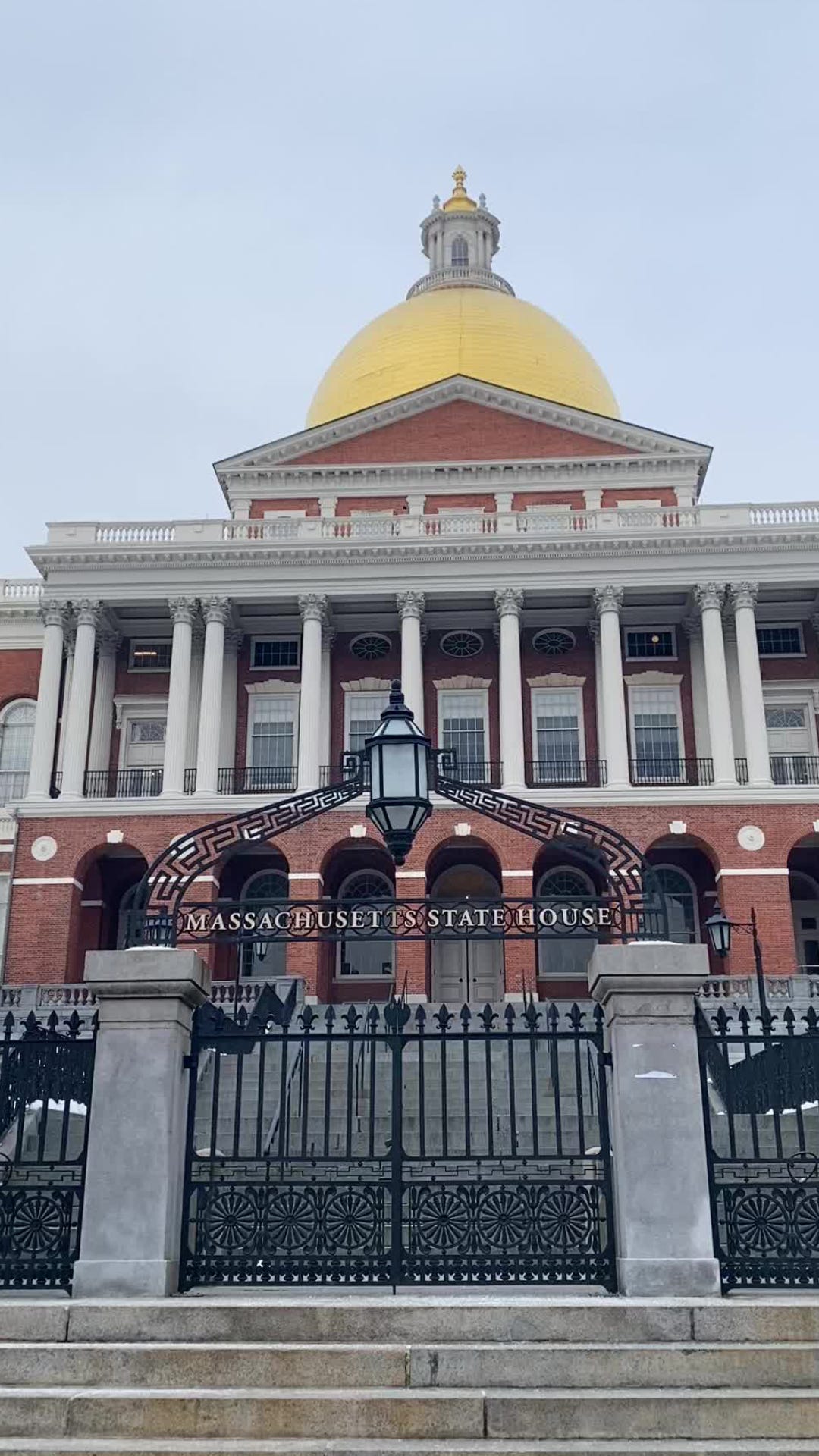


MA State House: Watch out for the ‘Sacred Cod’
Meet Margie Cullen, New England Politics Reporter, and get introduced to the Massachusetts State House – including the ‘Sacred Cod.’
- Healey’s FY27 budget, which she proposed on Jan. 28, is about $63 billion.
- On Feb. 11, legislators on the Ways and Means Committee asked her questions on what Healey did and did not file in the budget, and spoke about other challenges facing the state this year.
- The final budget for FY27 is due by July 1.
Massachusetts Gov. Maura Healey, state officials and the legislature bashed the federal government and hashed out policy details on Wednesday, Feb. 11, to kick off what will be a long process to create the budget for fiscal year 2027.
Healey’s FY27 budget, which she proposed on Jan. 28, is about $63 billion. It’s over $2 billion more than last year, and includes funds for transportation, healthcare, education and housing.
On Feb. 11, legislators on the Ways and Means Committee asked her questions on what Healey did and did not file in the budget, and spoke about other challenges facing the state this year in an over two hour hearing.
This was the legislature’s first meeting on the budget. They said they will hold at least seven more throughout the state as both the House and the Senate work to craft their own budget this spring. The final budget for FY27 is due by July 1.
Here are five takeaways.
The federal government poses a challenge
The governor and the chairs of the House and Senate Ways and Means Committee slammed President Donald Trump for the impact the federal government has and will have on Massachusetts’s budget.
“During COVID, states like Massachusetts had a partner in weathering the numerous emergencies we faced during the pandemic, and in many ways, the federal government helped save us financially during the pandemic,” House Chair Aaron Michlewitz, D-Boston, said. “Now in 2026, many times, it feels as if the federal government is actually the pandemic we have to confront. We’re trading turbulence, social service cuts, federal grants being randomly revoked, and daily threats of chaos.”
Federal funding provides dollars to needed services in states all over the country. But Healey said that Trump’s cuts have stripped away $3.7 million from Massachusetts, including from health care, food programs, public safety and public health.
State officials said that despite these challenges, their budget will work to protect its residents.
The Big Beautiful Bill affect
Healey has touted the fact that her new budget includes no new taxes. But that’s partly because the budget puts off implementing the costly tax provisions of the federal “One Big Beautiful Bill” through a bill Healey filed Jan. 15.
When asked about this choice, Healey said that the timing of the bill’s passage meant that she was unable to implement the changes immediately in a “responsible way.” (Trump signed the OBBBA on July 4, 2025, the same day Healey signed the FY26 budget.)
So instead, her bill will slowly phase in the tax provisions of the act to avoid losing hundreds of millions of dollars in the coming fiscal year.
Some states, like New York and California, are rejecting the federal tax changes entirely. When asked why they didn’t do that, Healey and Administration and Finance Secretary Matt Gorzkowicz said that they thought the bill included some benefits to competitiveness and growth in the economy.
Where is money from the Millionaire’s Tax going?
Healey’s proposal partly relies on revenue generated from the Fair Share surtax, often called the millionaire’s tax, to bump spending. The money is dedicated to education and transportation.
Legislators on Wednesday questioned Healey about where exactly that Fair Share money is going.
Gorzkowicz said that taken altogether, the budget puts 47% of that money towards transportation and 53% towards education.
Transportation funding
Legislators asked Healey questions about the MBTA and transportation throughout the Commonwealth.
Sen. Jo Comerford, D-Northampton, said that most of the Fair Share funding is going to the MBTA and that there needs to be more investment in transportation in western and north central Massachusetts.
On the other hand, Rep. Steven Owens, D-Watertown, praised the improved T service, but he asked that the governor not remove investment from other aspects of the MBTA, like the buses that service towns near Boston without subway lines.
Healey and Gorzkowicz emphasized their commitment to improving transportation all over the Commonwealth. Healey said she wanted to stop the “bleeding” when it came to the MBTA, but acknowledged that the Boston public transportation system isn’t relevant to everyone in the state. She promoted her effort to accelerate bridge repair as something that could help those outside of the MBTA system.
Education concerns
Legislators voiced many concerns over the state’s education programs at the hearing Wednesday.
Representatives of rural districts brought up long held concerns that they are left behind by current education funding formulas and programs. While Healey is increasing overall education funding this year, they said, it’s still not enough.
Healey and Gorzkowicz said they are open to conversations about Chapter 70, which is the formula that distributes education aid to school districts, and want to find other ways to fill in the gaps.
“I want every student in the state no matter where they live… to have access to an education that sets them up for success,” Healey said. “I think the question is how we get there.”
Legislators also alluded to the new Secretary of Education: On Feb. 10, Healey announced that former Secretary of Education Patrick Tutwiler would be stepping down and he would be replaced with Dr. Stephen Zrike Jr., who is currently the Superintendent at Salem Public Schools.

