


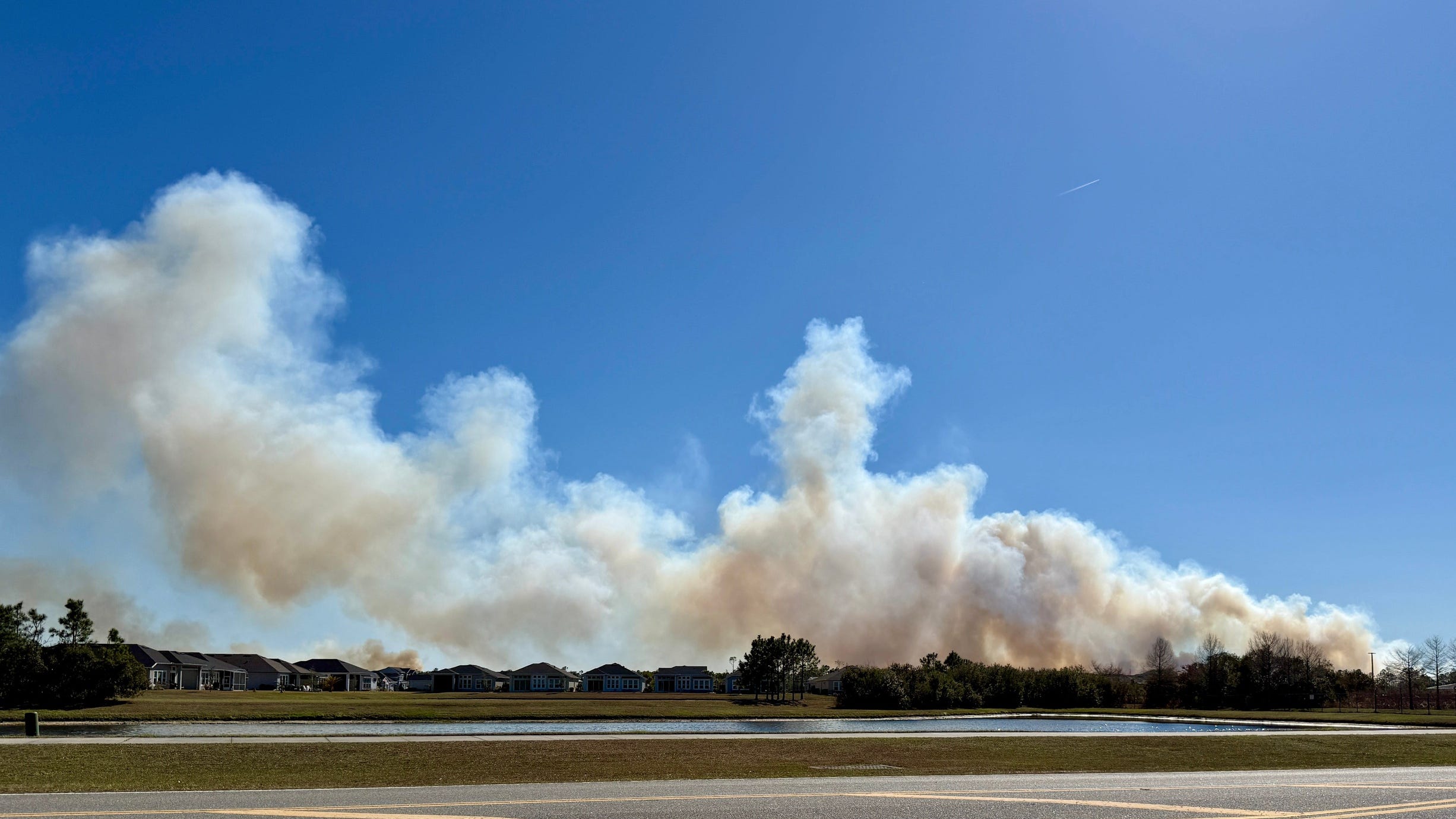

Drought conditions lead to elevated wildfire danger this spring
Multiple parts of the country, including Florida and the Four Corners region, are at risk of dangerous wildfires this spring.
Accuweather
- As of April 8, 2026, drought conditions in Massachusetts have improved.
- In March, the Bay State received approximately 3 to 5.5 inches of precipitation.
- State officials say that Massachusetts residents should remain vigilant when it comes to water use going forward.
A month ago, the drought − ongoing since 2024 in Massachusetts − was looking grim, but with the snowmelt and rainfall it has dramatically improved, except in one area of the Bay State.
“During March, Massachusetts received approximately 3 to 5.5 inches of precipitation, which is normal for this time of year,” according to the state’s Drought Management Task Force online. “Some areas – like Essex, Middlesex, Dukes, and Nantucket Counties – got less than normal, about 0.5 to 1.5 inches below average.”
At this time last month, the task force was reporting that the Central and Northeast regions were in a Level 3-Critical Drought; that the Connecticut River Valley moved to a Level 2-Significant Drought; and that the western region of Massachusetts was in a Level 1- Mild Drought. Cape Cod was labeled with a Level 2–Significant Drought.
Here’s how conditions have improved as of April 8, 2026, according to the Drought Management Task Force.
What are the current drought conditions in Massachusetts?
Only Cape Cod is still in a significant drought after conditions improved following a wet March.
The Connecticut River Valley, Central, Northeast, and Nantucket County regions have improved to a Level–1 Mild Drought.
Do this mean you can use water freely?
While drought conditions improved, the task force is still asking people to be judicious with their water use.
“Although local water supplies are currently stable, as the drought continues to persist and with the growing season and higher water demand season is before us, it is prudent for all to continue to be very conservative and save water whenever possible,” an online report from the Drought Management Task Force said.
What steps should people take in a drought?
During a drought, the task force recommends:
- Minimizing overall water use and being particularly mindful of indoor water use.
- Following local water use restrictions.
- Limiting or prohibiting washing of hard surfaces like sidewalks, patios, driveways and siding.
- Fixing any indoor leaks from toilets, faucets and showers, which can result in more than 60% of indoor water use.
- Monitoring total household water use shown on your water bill for sudden increases, which often indicate leaks.
- Conducting regular inspections of all pipes and fixtures, including those located in utility rooms, crawlspaces, and other hidden areas.
- Using dishwashers rather than handwashing dishes. Run the dishwasher only on a full load.
- Reducing shower length.
