

Gov. Maura Healey pledged to make transparency a centerpiece of her administration. But when it comes to One Commonwealth — a so-called dark money nonprofit she and her allies launched to advance her housing agenda — Healey has refused to disclose its donors, or call on the group to do so. The law doesn’t require it.
WBUR found two anyway: Peckham Industries, a New York road paving firm that’s won millions in state contracts from Healey’s transportation department, and DraftKings, the sports betting giant her administration regulates. Neither has any obvious stake in Massachusetts housing policy.
“It immediately rings bells,” said Maurice Cunningham, a retired professor at UMass Boston and an expert on campaign finance laws. “What does DraftKings care about housing? What does a paving company care about housing? They don’t. But this is a way to curry favor with a politician — in this case, the governor.”
Known as 501(c)(4)s under the federal tax code, nonprofits like One Commonwealth are sometimes called dark money groups because they can raise unlimited money without disclosing their donors. The groups cannot donate directly to candidates, but they can produce independent political ads, register voters and donate to other groups, including super PACs.
Dark money nonprofits have dominated national campaigns since the Supreme Court’s Citizens United decision in 2010 opened the door for the groups to spend money on politics.
But WBUR found that there’s been an uptick in the number of these nonprofits focused on influencing state and local politics.
Since 2024, at least 10 organizations have popped up as 501(c)(4)s, according to federal and state records. In the past, only a handful of them started each year.
WBUR discovered eight through IRS records, and two more through filings with the secretary of state’s office in Massachusetts. Because IRS filings for new groups can lag, the real number could be higher.
“What we’re seeing is an increase in the political power of special interests at the expense of everyday residents,” said Geoff Foster, executive director of Common Cause Massachusetts.
“Voters deserve to know who’s trying to influence our elected leaders,” he said.

Inside One Commonwealth
One Commonwealth’s 2024 tax filing offers a glimpse into what are typically black-box political funds that are becoming more common in Massachusetts politics. The filing also raises questions about the group’s ties to the governor’s political operation.
According to the document, One Commonwealth raised $748,000 from undisclosed donors in its first year. Half of that money was raised by a fundraising specialist, Megan Gillis, who was paid $20,000 by the nonprofit.
Gillis is also a finance director for Healey’s reelection campaign, according to her LinkedIn profile. In other words, the same person helping raise money for Healey’s campaign was also paid to solicit donors for One Commonwealth.
“ We don’t know where the money’s coming from, but there’s no doubt that the people on the inside know,” said Brendan Glavin, director of insights at the watchdog OpenSecrets.
“Voters deserve to know who’s trying to influence our elected leaders.”
Geoff Foster, Common Cause
Gillis didn’t return multiple requests for comment.
One Commonwealth was created to rally support for the MBTA Communities Act, a controversial zoning law intended to create more housing that’s faced pushback from some towns.
The nonprofit has other ties to Healey’s political operation. Lynda Tocci, who is listed as One Commonwealth’s president on its tax filing, worked as a senior advisor to Healey’s 2022 campaign.
Gemma Martin is listed as the treasurer of Healey’s recently-launched reelection campaign and has held the same role for the nonprofit, state business records show. Treasurer of One Commonwealth was not a paid position, but her firm, Chick Montana Group, has been paid by both groups. Martin declined to comment.
Kate Kelly, executive director for One Commonwealth, told WBUR that the group’s mission is to “support efforts to make housing more affordable across the Commonwealth” and “adheres to all applicable laws and regulations governing nonprofit social welfare organizations.”
Kelly said that as of 2026, no one from Healey’s reelection campaign is employed by the nonprofit and that the group doesn’t advocate for a specific candidate or campaign. (That could require registering with the state’s Office of Campaign and Political Finance and potentially disclosing its donors.)
Healey’s office declined to answer questions from WBUR about One Commonwealth. In December, a WBUR reporter asked the governor whether she actively solicits donations for the group; she referred questions back to the nonprofit.
So far, Healey and her aides have refused to name the contributors to One Commonwealth or call on the nonprofit to disclose them.
But sometimes donors reveal themselves.
As WBUR first reported, the sports betting giant DraftKings disclosed to state gaming regulators that it contributed $50,000 to One Commonwealth last year.
Now WBUR has found another donor through campaign finance and IRS records: Peckham Industries, a New York-based road construction company. The firm donated $10,000 to One Commonwealth in 2024 — $5,000 through a family foundation and $5,000 from the company’s federal PAC.
Peckham Industries has a long history of contracting with local and state governments across the Northeast. Under the Healey administration alone, its Massachusetts subsidiary Palmer Paving has won at least four MassDOT pavement and street resurfacing contracts worth more than $25 million, according to state procurement records.
The firm was the lowest bidder on the competitively bid contracts, and there is no evidence the donations influenced the awards.
Peckham Industries’ CEO, Damian Murphy, said the firm and its charitable foundation make donations to support issues important to its employees and their families. He said the firm’s contracts with Massachusetts were won through a “robust competitive process.”
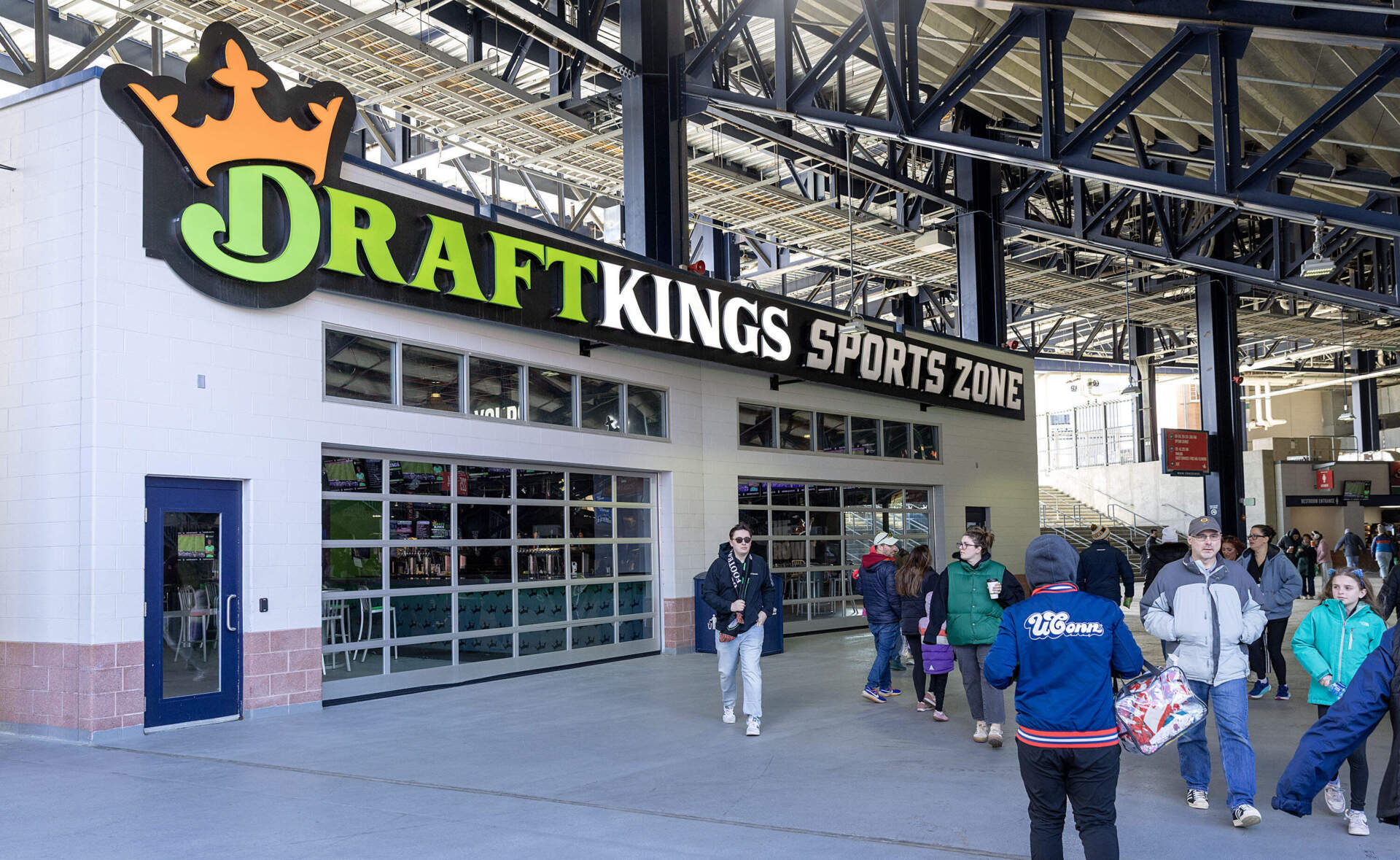
DraftKings, meanwhile, also has significant business interests before the state. The Boston-based company’s sports betting operation is regulated by Massachusetts gaming authorities. It’s also facing a serious threat to its revenues from a sports betting bill moving forward on Beacon Hill.
The Bettor Health Act would ban bets on a player’s performance and wagering during live sporting events. It would also raise the tax rate on sports betting revenue from 20% to 51%. Healey hasn’t taken a public position on the measure, which recently advanced out of a House committee on a 5-0 vote.
A spokesman for DraftKings didn’t return multiple emails seeking comment.
The growing controversy surrounding online sports betting is an example of why politicians might prefer donations to 501(c)(4)s, according to Saurav Ghosh, a senior attorney at the Washington-based Campaign Legal Center. He said a direct donation to a candidate carries political risk.
“Their opponent might say, ‘Look at my opponent in this race — they’re getting huge amounts of money from the sports gambling industry,’ ” said Ghosh.
“By doing it through a 501(c)(4), their fingerprints are wiped away,” he said. “The candidate who benefits from their support knows. But the public, when they’re deciding who to vote for — they’re deprived of that information.”
One Commonwealth’s 2025 fundraising remains almost entirely unknown. DraftKings’ $50,000 is the only donation that year the public knows about.
A dark money powerhouse
Dark money spending in federal races reached a record $1.9 billion in 2024.
A surprisingly large share of that money flowed through a commercial office building on the North Shore. In Beverly, Charles Gantt runs a Republican consulting firm called Bulldog Compliance, which helped set up and run more than a dozen 501(c)(4) groups backing President Donald Trump and other conservative candidates and issues. Collectively, the groups raised $488 million during the 2024 electoral cycle, IRS records show.
Calls and emails to Gantt at Bulldog Compliance weren’t returned. But records show his clients aren’t only national.
Gantt is also listed as the treasurer for four recently-formed 501(c)(4)s aimed at influencing Massachusetts politics, according to state records.
A pair of groups are involved in statewide ballot initiatives. Another is a nonprofit called the Boston Policy Institute, which sparked some controversy after publishing research reports critical of Boston Mayor Michelle Wu’s policies.
In 2024, the think tank raised and spent around $380,000, according to IRS records. Executive Director Gregory Maynard declined an interview request from WBUR but he told the Commonwealth Beacon in 2024 that anonymity was needed so backers don’t alienate City Hall.
Democrats like Wu have also benefited from dark money. In last year’s mayoral race, the Green Advocacy Project, a California-based 501(c)(4), steered $200,000 into Bold Boston — a super PAC that backed Mayor Michelle Wu against Josh Kraft — making it the group’s single largest donor.
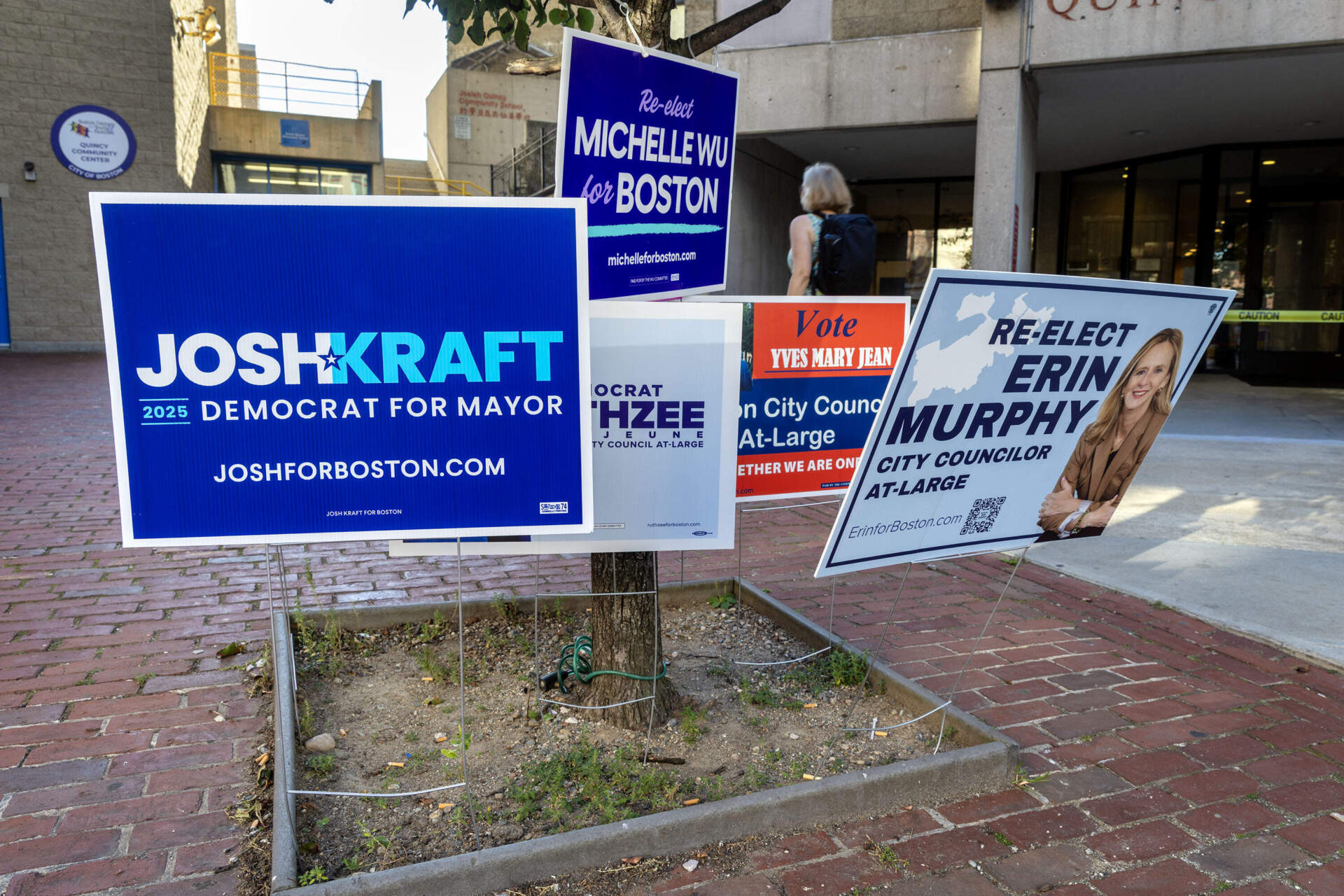
Local and state elections are far less expensive than federal ones, which means big checks from undisclosed donors can have more impact. Ballot initiative campaigns, in particular, have become attractive targets for these types of nonprofits, according to campaign finance experts.
“Right now we are seeing a flood of money trying to influence the outcome of statewide ballot questions,” said Foster, with Common Cause Massachusetts.
For example, dark money is driving an effort to roll back recreational marijuana sales in Massachusetts. All $1.55 million raised last year for a possible 2026 ballot question seeking to repeal the state’s cannabis law came from SAM Action Inc., a Virginia-based 501(c)(4) that doesn’t disclose its donors.
The group’s CEO, Kevin Sabet, declined to answer WBUR’s questions about its funding, only stating that its donors are “parents and families” who have been harmed by marijuana.
SAM Action also provided nearly all the funding for the Coalition for Safe Communities, a Massachusetts 501(c)(4) that opposed the legalization of plant-based psychedelics when the initiative was on the ballot in 2024.
Foster said ballot questions are a key part of how the Massachusetts Constitution intended to empower citizens.
“But that process is jeopardized when large, wealthy special interests — from in-state or out-of-state — come in and use money to influence public opinion,” he said.
WBUR used ProPublica data on IRS returns for nonprofits.
